


Honda Prologue vs. CR-V Hybrid: Is Charging Cheaper Than Gas in San Diego?
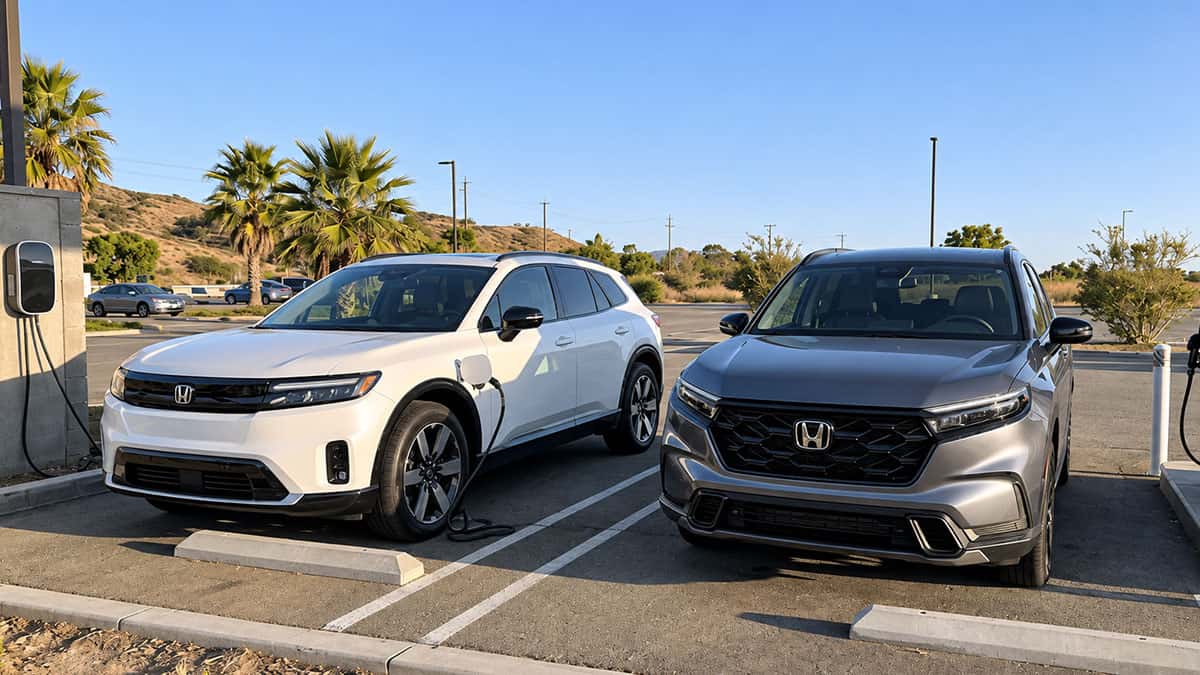 Quick Answer: Charging a Honda Prologue is cheaper than fueling a CR-V Hybrid as long as you pay less than about $0.49 per kWh, assuming gas costs $6.50 per gallon. On SDG&E’s EV-TOU-5 plan, winter super off-peak electricity costs $0.123 per kWh. At that rate, a Prologue FWD driven 1,000 miles a month would cost about $487 a year to charge, compared with $1,950 in gas for the CR-V Hybrid. This is an illustrative annual estimate assuming that low rate applies to every charging session. Charging during expensive peak hours, however, can make the Prologue cost more.
The surprising part of the Honda Prologue vs. CR-V Hybrid comparison is how much the electricity rate changes the result. Two Prologue owners could drive the same distance and pay very different amounts, depending on their utility plan, when they plug in, and whether they charge at home or at public stations.
Honda Prologue vs. CR-V Hybrid: What Does 100 Miles Cost?
The easiest way to compare an electric SUV with a hybrid is to look at how much energy each needs to travel 100 miles. For this comparison, we’re using the 2026 Prologue FWD and the 2027 CR-V Sport Hybrid 2WD.
- 2026 Honda Prologue FWD: Based on its EPA rating, it uses about 33 kilowatt-hours (kWh) per 100 miles. At $0.123 per kWh, that’s just $4.06 in electricity. At a much higher summer peak rate of $0.802 per kWh, the same trip costs approximately $26.47.
- 2027 Honda CR-V Sport Hybrid 2WD: With an EPA-estimated 40 MPG combined, it needs approximately 2.5 gallons to travel 100 miles. At our assumed gasoline price of $6.50 per gallon, that’s $16.25.
When comparing the Honda Prologue vs. CR-V Hybrid, the Prologue has a clear advantage at low charging rates, but that edge can disappear quickly when electricity gets expensive, and the difference becomes even more noticeable over a full year.
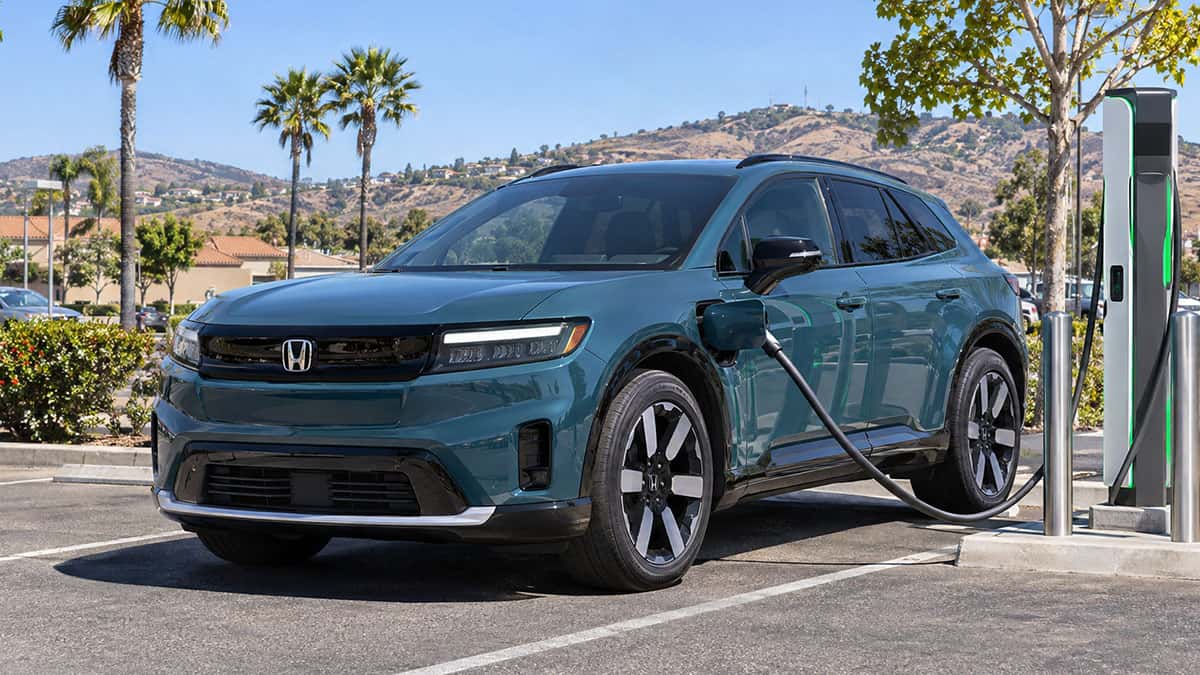
How Much Could It Cost to Charge a Prologue for a Year?
Driving 1,000 miles a month requires approximately 3,960 kWh annually in the Prologue FWD, based on its EPA rating. The CR-V Hybrid would use about $1,950 in gasoline over the same 12,000 miles.
Using published San Diego Gas & Electric rates (SDG&E), here’s how the Prologue compares:
- $0.123/kWh (winter super off-peak). About $487 a year, saving $1,463 compared with the CR-V Hybrid
- $0.330/kWh (winter super off-peak, with baseline credit). About $1,307 a year, saving $643
- $0.437/kWh (winter super off-peak, above baseline). About $1,731 a year, saving $219
- $0.524/kWh (winter on-peak). About $2,075 a year, costing $125 more
- $0.802/kWh (summer on-peak). About $3,176 a year, costing $1,226 more
The first and fourth scenarios use SDG&E’s EV-TOU-5 plan, while the second and third use TOU-DR1. The winter rates reflect pricing published for November 2026, while the summer on-peak example uses August 2026 pricing to illustrate seasonal differences.
These are illustrative estimates that assume every kilowatt-hour is bought at the same rate. In practice, you’ll likely charge across different times and seasons, so your actual yearly cost will depend on your charging schedule, electricity plan, and whether you use public charging stations. Keep in mind that SDG&E rates change periodically, and these estimates leave out fixed monthly utility charges.
At What Electricity Rate Does the CR-V Hybrid Become Cheaper?
The break-even point is approximately $0.49 per kWh. That’s the electricity price at which the Prologue FWD and CR-V Sport Hybrid would cost roughly the same to travel the same distance, assuming gasoline costs $6.50 per gallon.
That makes $0.49 a handy number to keep in mind when you check your electricity bill or compare public charging prices, since anything below it favors the Prologue and anything above it favors the hybrid. The next step is to make sure most of your charging happens during the cheaper hours.
When Should You Charge a Prologue to Pay Less in San Diego?
For households on SDG&E’s EV-TOU-5 plan, the cheapest charging periods are overnight and during certain midday hours. The most expensive period is generally between 4 p.m. and 9 p.m.
On weekdays, the schedule breaks down like this.
- Midnight to 6 a.m. Super off-peak
- 6 a.m. to 10 a.m. Off-peak
- 10 a.m. to 2 p.m. Super off-peak
- 2 p.m. to 4 p.m. Off-peak
- 4 p.m. to 9 p.m. On-peak
- 9 p.m. to midnight Off-peak
On weekends and designated holidays, super off-peak hours extend from midnight to 2 p.m.
If you arrive home around 6 p.m., scheduling your Prologue to start charging at midnight could help you avoid the most expensive electricity hours. And if you work from home, the 10 a.m. to 2 p.m. window offers another opportunity to charge at a lower rate. SDG&E now offers this midday super off-peak period year-round.
Charging speed matters too, because the cheapest windows are limited. With a Level 2 home charger, Honda estimates the Prologue can add up to 34.1 miles of range per hour, or roughly 205 miles overnight, while a standard 120-volt outlet adds only about 4.2 miles per hour, or around 25 miles in the same six hours.
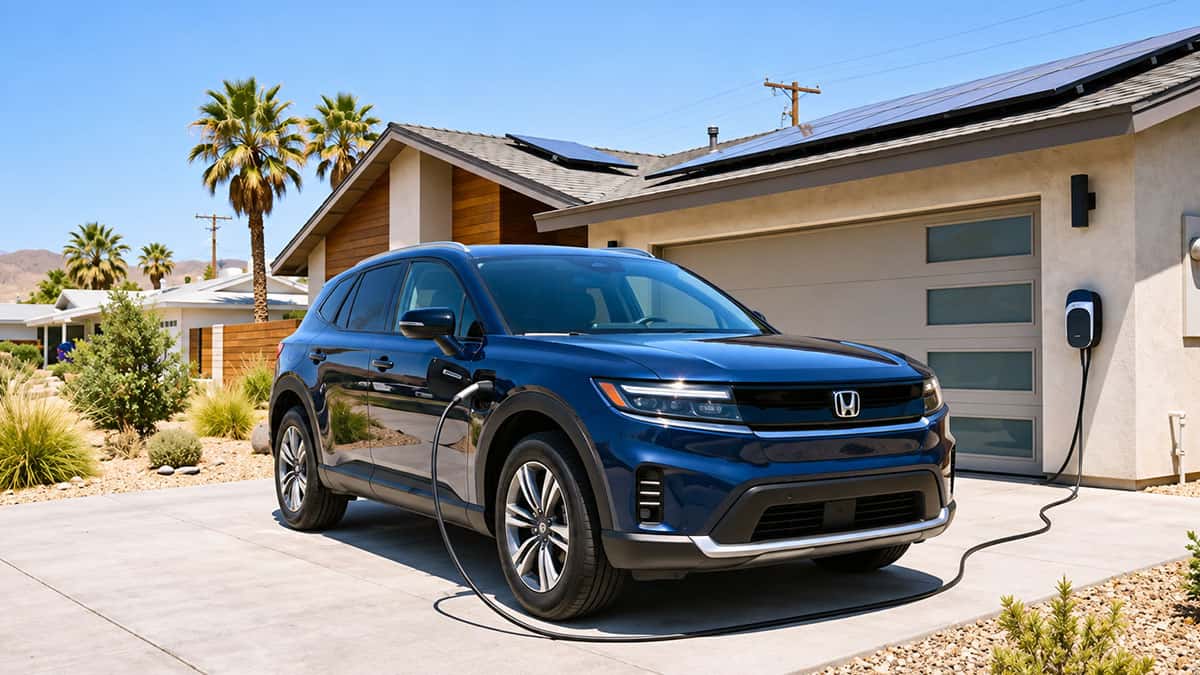
How Would Solar Panels or Public Charging Change Your Costs?
Your charging setup can make as much of a difference as your electricity plan.
If you have home solar: Charging your Prologue with electricity generated by your solar panels could reduce how much power you purchase from the grid. The financial benefit depends on when your system produces electricity, whether you have battery storage, and how your utility credits exported energy. Solar charging isn’t automatically free, but it may help lower your costs.
If you rely on public charging: The lowest residential rates may not be available to you. Public stations set their own prices, which can include per-kWh charges and additional session or parking fees. Before assuming the Prologue will cost less to operate, compare the prices at stations you would regularly use.
It’s also worth budgeting for a home charger installation, which isn’t included in these estimates.
Would You Save More With a Prologue or CR-V Hybrid?
In the Honda Prologue vs. CR-V Hybrid comparison, the Prologue’s biggest financial advantage comes from convenient access to affordable charging. If you can charge at home during super off-peak hours, you could spend substantially less on energy for your daily commute through San Diego.
But if you live somewhere without reliable home charging, frequently depend on public stations, or can’t avoid expensive electricity periods, the savings may be smaller than expected. The CR-V Hybrid also offers the convenience of gasoline refueling without needing to plan charging stops.
A quick look at your latest SDG&E bill is the best place to start, since your rate and charging hours will shape your savings more than anything else.
If you’d like to see both options in person, our team at Pacific Honda can walk you through the remaining Honda Prologue inventory alongside the CR-V Hybrid and help you compare purchase prices with your estimated energy costs.
FAQs About the Honda Prologue vs. CR-V Hybrid
How often would you need to charge a Prologue?
Not as often as you might think. The 2026 Prologue FWD has an EPA-estimated range of 308 miles, so someone driving 1,000 miles a month could get by with two or three charging sessions a week. Many owners simply plug in overnight, which also makes it easier to stay in the cheapest rate periods.
Does the EPA’s kWh per 100 miles rating include charging losses?
Yes. EPA electricity-consumption ratings measure energy drawn from the outlet and include typical charging losses under standardized testing conditions. The Prologue’s 33 kWh per 100 miles already accounts for those losses, so there’s no need to add an arbitrary charging-loss percentage to our calculations.
Is there a 2027 Honda Prologue?
No. Honda has said it will end U.S. sales of the Prologue after the 2026 model year, with sales expected to continue through early 2027 based on remaining inventory. That’s why this comparison uses the 2026 Prologue’s EPA ratings alongside the 2027 CR-V Hybrid, and availability will depend on what’s left in stock.
Do San Diego Community Power customers pay the same charging rates?
Not necessarily. San Diego Community Power customers generally pay their electricity generation charges alongside applicable SDG&E delivery charges. The bundled SDG&E rates used in this article may therefore differ from their total effective electricity prices, so it’s important to check both the utility plan and the generation provider.
Does the Prologue AWD cost more to charge than the FWD model?
Generally, yes. The 2026 Prologue FWD earns an EPA-estimated 104 MPGe combined, compared with 99 MPGe for the EX and Touring AWD versions. The AWD models use slightly more electricity per mile, so their charging costs may be higher under the same conditions.
0 comment(s) so far on Honda Prologue vs. CR-V Hybrid: Is Charging Cheaper Than Gas in San Diego?