


Honda CR-V vs CR-V Hybrid: Which Costs Less to Fuel in San Diego?
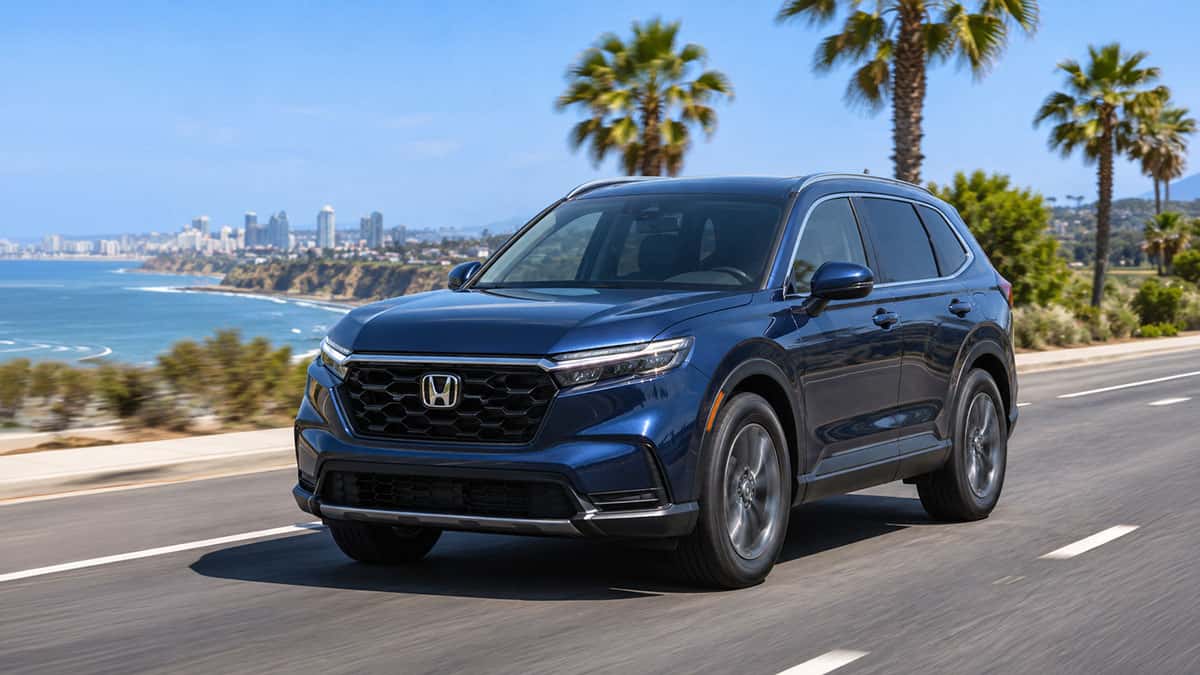 Quick Answer: The 2027 Honda CR-V Hybrid costs less to fuel than the gas-powered CR-V, making it a potentially worthwhile investment for San Diego drivers with regular commutes. Although the CR-V Sport Hybrid costs $2,480 more upfront than the gas CR-V EX, its 40 MPG combined rating compared to 30 MPG for the gas model translates to about $650 in annual fuel savings for drivers traveling 1,000 miles per month at $6.50 per gallon. Actual savings depend on driving habits, traffic conditions, and whether you choose all-wheel drive. Drivers who travel fewer miles or prioritize towing capacity may find the gas-powered CR-V a more practical choice.
How quickly those savings add up depends on your routine. In a Honda CR-V vs CR-V Hybrid comparison, daily traffic, the need for all-wheel drive, and how long you plan to keep your SUV can shift the numbers one way or the other.
Is the CR-V Hybrid Worth the Higher Price?
For $2,480 more in starting MSRP, the 2027 CR-V Sport Hybrid 2WD offers significantly better fuel economy than the gasoline CR-V EX 2WD. It gets an EPA-estimated 40 MPG combined compared with 30 MPG for the EX, meaning it could use about 25% less gasoline over the same distance.
The difference is especially noticeable in city driving, where the hybrid gets 43 MPG compared with the EX’s 28 MPG. On the highway, the gap narrows to 36 vs 33 MPG. The hybrid also produces 204 horsepower compared with the gasoline model’s 190.
Since much of the extra cost goes toward the hybrid powertrain, whether it’s worth it depends mostly on how many miles you drive and where you spend them.
Honda CR-V vs CR-V Hybrid: How Much Would You Spend on Gas?
Using each model’s combined EPA rating and gas at $6.50 per gallon, these are the estimated yearly fuel costs for the 2WD CR-V EX and Sport Hybrid.
- 750 miles per month
$1,950 (CR-V EX) minus $1,463 (Sport Hybrid) = $488 saved per year
- 1,000 miles per month
$2,600 (CR-V EX) minus $1,950 (Sport Hybrid) = $650 saved per year
- 1,500 miles per month
$3,900 (CR-V EX) minus $2,925 (Sport Hybrid) = $975 saved per year
Please note: These figures are approximate. Actual cost comparisons between the Honda CR-V vs CR-V Hybrid will vary with gas prices and driving conditions, but the gap grows steadily as your monthly mileage increases.
How Long Until the CR-V Hybrid Breaks Even on Gas?
At 1,000 miles per month, the Sport Hybrid’s lower fuel costs could make up its $2,480 higher starting MSRP in about 3.8 years. Someone driving 750 miles monthly would need approximately 5.1 years, while a driver covering 1,500 miles could recover the difference in roughly 2.5 years.
Choosing AWD extends the timeline slightly. At 1,000 monthly miles, the AWD Sport Hybrid would take approximately 4.3 years to recover its price premium through gasoline savings.
These estimates use starting MSRPs of $33,550 for the EX and $36,030 for the Sport Hybrid, before Honda’s $1,550 destination charge, which is the same for both. Keep in mind that they only compare fuel, so the price you actually pay and long-term ownership costs can shift the final math.
Does All-Wheel Drive Change the Savings?
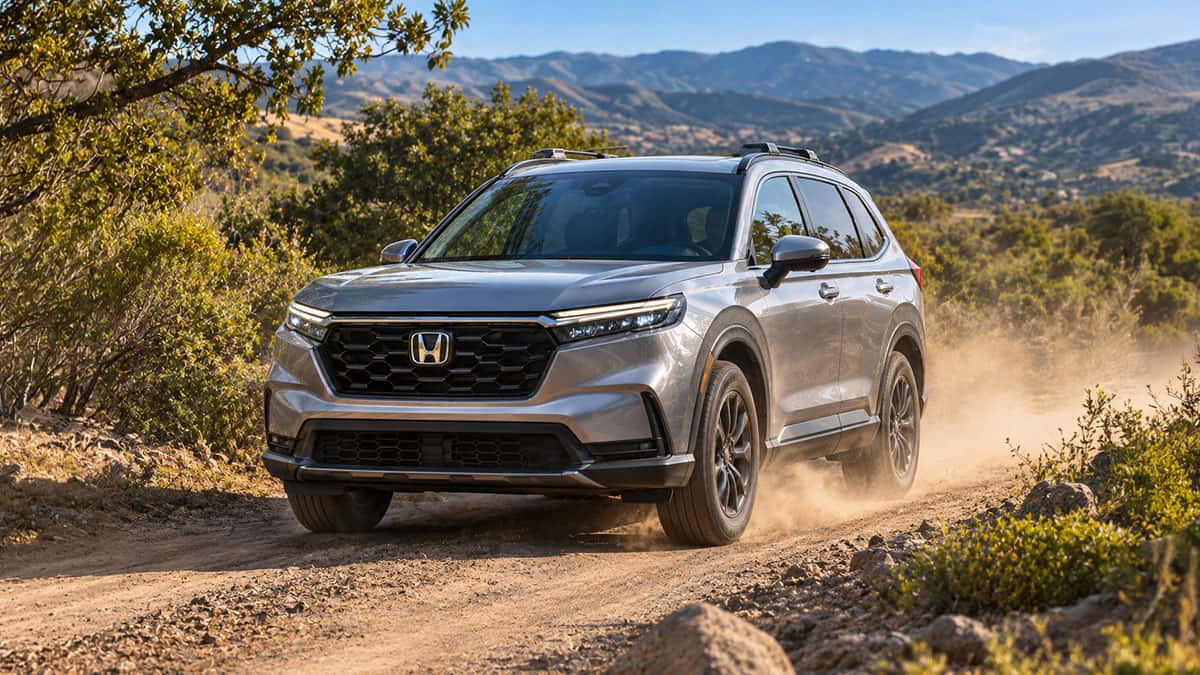
Yes. All-wheel drive (AWD) reduces fuel economy in both CR-V models, although the hybrid remains more efficient.
- Gas CR-V EX: 30 MPG combined with 2WD and 29 MPG with AWD
- CR-V Sport Hybrid: 40 MPG combined with 2WD and 37 MPG with AWD
At 1,000 miles per month and $6.50 per gallon, the AWD hybrid could save about $582 annually, compared with $650 for the 2WD models. Since AWD adds the same $1,500 to both models, the price gap stays at $2,480, and the hybrid still comes out ahead on fuel.
How Would a San Diego Commute Affect Those Numbers?
When comparing Honda CR-V vs CR-V Hybrid, where you’re driving matters. The CR-V Hybrid does its best work at lower speeds, where it can rely more on electric power and get 43 MPG in the city compared with the EX’s 28 MPG. So if your mornings involve inching along I-5 toward downtown or sitting in rush-hour traffic on I-805 or I-15, you’re likely to see the full benefit, while steady highway driving narrows the gap.
Commuting miles also add up quickly. An 18-mile drive each way over 21 workdays covers roughly 750 miles a month before errands or weekend trips, which works out to about $488 in yearly savings, or about $2,440 over five years.
Which CR-V Is the Better Buy for Your Budget?
If you drive relatively few miles or expect to replace your vehicle within a few years, the gasoline CR-V EX may be the more economical purchase. Its lower upfront price means you won’t need years of fuel savings to recoup the extra investment.
The Sport Hybrid becomes the stronger choice in the Honda CR-V vs. CR-V Hybrid comparison if you drive more and plan to keep your SUV longer. It also adds a bit more power, which can make merging onto busy San Diego freeways feel easier.
Since dealer pricing can differ from MSRP, the most accurate comparison starts with real vehicles. You can browse our Honda CR-V inventory, check monthly costs with our payment calculator, or stop by Pacific Honda on Convoy Street to drive both versions back to back. For more on what’s changing this year, see our 2027 Honda CR-V guide and check out our current Honda lease and finance offers.
FAQs About the Honda CR-V vs CR-V Hybrid
Which CR-V Hybrid trim gets the best gas mileage?
The 2027 CR-V Sport Hybrid and Sport-L Hybrid with 2WD offer the highest combined fuel economy at 40 MPG. Their AWD versions and the Sport Touring Hybrid get 37 MPG combined, while the TrailSport Hybrid gets 35 MPG combined.
Is the EX-L vs Sport-L Hybrid comparison any different?
Yes. The 2027 CR-V EX-L 2WD starts at $35,800 MSRP, while the Sport-L Hybrid 2WD starts at $39,125. That $3,325 difference would take approximately 5.1 years to recover through fuel savings at 1,000 miles per month and $6.50 per gallon. If hybrid efficiency matters more than extra features, the Sport Hybrid 2WD starts at $36,030, just $230 more than the EX-L, though its equipment is closer to the EX.
Can the CR-V Hybrid tow as much as the gas CR-V?
No. The 2027 gasoline CR-V has a maximum towing capacity of 1,500 pounds, compared with 1,000 pounds for the hybrid. If you occasionally tow a small trailer, that difference is worth considering before choosing a powertrain.
Does the CR-V Hybrid have less cargo space?
Yes. The CR-V EX provides 39.3 cubic feet behind the rear seats, compared with 36.3 cubic feet in the Sport Hybrid. The three-cubic-foot difference may matter if you frequently transport bulky items.
How far can a CR-V Hybrid go on a tank of gas?
The 2027 CR-V Sport Hybrid 2WD has a 14-gallon fuel tank and gets an EPA-estimated 40 MPG combined. That works out to a theoretical range of about 560 miles, compared with 420 miles for the gasoline EX. Actual driving range will vary based on conditions and usable fuel capacity.
0 comment(s) so far on Honda CR-V vs CR-V Hybrid: Which Costs Less to Fuel in San Diego?